
Can You Get A Beard Hair Transplant?
Yes! Beard hair transplants can be successfully done using the follicular unit extraction (FUE) technique, where hair grafts are taken out from the back of the scalp and relocated to the beard area, getting implanted via small incisions.
Facial hair has long-held cultural and cosmetic significance, especially as a symbol of masculinity. While some individuals grow facial hair with ease, others may struggle due to factors like genetics, health conditions, trauma, or ageing. Fortunately, beard restoration offers a long-lasting solution for achieving dense and natural-looking facial hair coverage.
How Much Does a Beard Transplant Cost?
A beard transplant surgery can vary in price depending on where you have it done. In the UK, the surgery can cost anywhere from £3,000-£5,000, whereas in Turkey, it might cost you £2,000-£2,500, on average.
Hair Transplants facilitated by Longevita include the maximum number of grafts the individual requires.
Many people choose to travel abroad for their beard transplant, as comprehensive treatment plans in countries like Turkey offer a cost-effective option while independent clinicians operate to recognised clinical standards — individual results vary. Lower clinic and operational costs make it possible to achieve natural-looking beard density and definition at a significantly lower price than in the UK.
You can explore how beard transplant costs vary internationally on our Average Cost of Hair Transplant in Turkey and Hair Transplant Cost Comparison by Country pages.
Want a personalised Hair Transplant estimate?
Use our Price Calculator to get an estimate of how much your hair transplant, or any other treatments you’re interested in might cost. This quick tool helps you plan your treatment and budget with confidence before booking a consultation.
Select your treatment location
Select your treatment
Estimated Cost
All prices are estimates. Final cost may vary.
What’s included
DISCLAIMER
This is a price estimate only for budgeting purposes however it cannot be used as a substitute for a formal price quote that can only be given after a consultation with a qualified medical professional.
Optional additional treatments
Let's Turn Your Estimate Into a Plan
Complete the form and our team will reach out with everything you need to move forward.
Get a Free Hair Transplant Consultation
Fill out the form to receive a callback and book a consultation to receive your Free, no-obligation hair transplant treatment plan tailored specifically for your hair loss requirements.
Who Is A Good Candidate for a Beard Transplant?
Many individuals undergoing beard transplant surgery have sparse or patchy growth or lack beard hair altogether. Other reasons for having this surgery may include:
- Concealing scars from trauma (burns), surgery, cleft lip, or acne
- Addressing alopecia barbae (if in remission)
- Correcting prior facial hair removal through laser
- Managing traction alopecia (commonly seen in Sikh males)
- Gender affirmation for female-to-male patients
Before deciding on a beard transplant, it’s important to inform ythe independent clinician if you also plan to undergo a scalp transplant. This is because the donor area is finite, typically containing 6,000-7,000 follicular units for safe extraction.
Depending on the extent of baldness, the number of grafts you can need for scalp coverage can vary from 500 to 6,000.
If you choose a beard transplant, which may require 2,500 or more grafts, it will reduce the overall donor hair reserve. This can limit the density or extent of scalp coverage achievable, which is why advanced planning is important.
How Is The Donor Area Planned For Beard Transplants?
For beard transplantation, donor planning involves determining the number of grafts required, the density of follicular units/cm2, and the number of grafts available in the donor area, as well as the recipient area size.
Typically, a beard transplant surgery requires 2,500 to 3,000 grafts, but this can vary from person to person.
Broadly speaking, facial hair can be divided into four different regions: the hair on the cheeks, the hair above the upper lip (moustache), the hair below the lower lip (goatee) and the sideburns.
Depending on the area, the graft count can range from:
- Per cheek: 350-1,000 grafts
- Moustache: 200-500 grafts
- Under lower lip: 50-500 grafts
- Sideburns: 150-300 grafts
The density of grafts is usually 25-40 follicular units per cm2, but it can vary – being higher in the moustache and chin/goatee area – and have a gradient within each region to ensure natural results.
Additionally, the ethnicity of the person, as well as the type of graft (how curly it is), hair thickness, the contrast between the skin and hair colour, and the number of hairs per graft, can all have an impact on the final density.
As mentioned above, the scalp is used as the donor area for a beard transplant. Specifically, there’s a “safe donor area” at the back of the scalp – where the hair continues to grow even after transplantation – which is extracted for this surgery.
Around 6,000 grafts can be safely extracted from this area without leaving it patchy, so if you’re only getting a beard transplant, there should normally be a sufficient number of grafts available.
Donor planning also involves determining the size of the area that needs to be filled, and for this, it is important to discuss the desired shape of the beard with the patient.
While some want a fuller beard high up on the cheeks, others may desire more fullness around the jawline in what’s known as a low-strap beard. Ythe independent clinician will draw the design of your beard on your face, and your surgery will only proceed once you approve the design.
Do You Have to Shave Your Head For A Beard Transplant?
You do not need to shave your entire scalp for a beard transplant. Only the donor area will be trimmed to 1-2 mm at the clinic to help with graft extraction.
The beard itself can remain unshaven if you opt for direct hair implantation using a Choi implanter pen. However, if you choose traditional FUE, your beard hair will need to be trimmed.
How Is a Beard Transplant Performed?
After your preoperative consultation, in which the outline of your new beard will be drawn and your scalp will be shaved, you will be headed to the operation theatre.
Beard Transplant Graft Extraction Process
Under local anaesthesia, grafts are extracted from the donor area using a motorised punch tool around 0.8-1 mm in diameter.
The tool frees the graft from its surrounding attachments, and a technician gently pulls the grafts out with the help of forceps.
These grafts are then stored in a solution of isotonic water and adrenaline to ensure their survival outside the body.
Creating Incisions for Beard Transplant
Making incisions is one of the most important parts of the surgery because it determines how your beard hair will grow, which affects the naturalness of the final result. Therefore, incisions are only made by the surgeon.
In a beard transplant, typically, 1-2 hair grafts are used, sometimes with 3-hair grafts placed at the centre of the cheeks for density. The size of the incisions can vary from 0.5 to 0.9 mm, depending on the graft size – larger grafts require larger incisions. These incisions can be made using metal blades or a Choi implanter pen, which offers greater protection for the grafts.
In addition to the size, the angles of these incisions need to be carefully controlled and follow that of the existing hair in the area. Generally, it is kept low as the direction of the hair is predominantly downwards, but it can be a bit sideways in the lateral portions of the moustache and the cheeks to reflect the natural hair growth pattern.
Incision density per cm2 also varies across facial areas. Cheeks typically have increasing density moving downward, tapering near the jawline where hair from above can improve coverage. Similarly, the density of the moustache and sideburns is higher at the top and decreases towards the bottom, benefiting from the layering effect that ensures adequate coverage in the lower half.
The entire process can take a couple of hours, but it depends on the number of incisions and the surgeon’s experience.
Placing Grafts for Natural Beard Growth
After all the incisions have been made, experienced technicians place the grafts into each slit with the help of tweezers.
Single hair grafts are usually placed at the top and lower margins of the cheek beard, with 2 and 3-hair grafts in the middle. Sideburns are filled with single hair grafts along the outer edges as well, while multiple hair grafts are placed in the centre.
In the moustache, single hair grafts are placed at the top, followed by 2-hair grafts. The goatee area typically receives 1-hair grafts.
The entire procedure can take 6 to 8 hours – it can be more or less depending on the number of grafts being transplanted as well as whether you’re also getting a scalp transplant with it.
How Long Does It Take To Recover From A Beard Transplant?
Beard transplant recovery can include the following:
You will be provided with aftercare instructions in your follow-up appointment the day after the procedure. And if you have any further questions, you can always reach out to support@longevita.co.uk.
Downtime
You may be advised to rest for 1 week after your beard transplant.
Side Effects
Some temporary side effects can include swelling, redness, itchiness and scabbing, but they should get better with time.
Washing
You’ll have to wait for 2 days before you can start washing your donor and beard areas. A foam and shampoo will be given to you for this, as well as directions on their usage.
Eating
For around 3 days, you’ll have to stick to a diet of liquids and soft foods (e.g. yoghurt, soup, and pasta) so you don’t experience pain. Avoiding salty foods is important as it can worsen swelling. You can resume your normal diet once the swelling is gone, which can take 3-4 days.
Talking
You can start talking normally after the beard transplant surgery. However, you should be careful about laughing too hard just a few days after, as that could potentially dislodge the newly transplanted grafts.
Sleeping
You’ll be advised to sleep on your back while elevated after your beard transplant. You might have to wait for 2 weeks before being able to lie down on your face.
Grooming
Scissors can be used after 2 months, a trimmer after 3 months and a razor after 6 months to groom the beard after surgery.
Shock Loss
Your beard hair can temporarily shed a couple of weeks or a month after the surgery. This is called shock loss, and it can make the beard look patchy for a while, but it will not affect the final outcome.
Physical Activities
A month after your beard transplant, you can resume routine exercising as well as swimming.
Beard Transplant Before-And-After Photos
Your beard hair can start growing 3 months after the surgery, and you can expect to achieve a more significant improvement at the 6-month mark. The final result can be seen after 12-18 months. Keep in mind that outcomes can vary between patients.
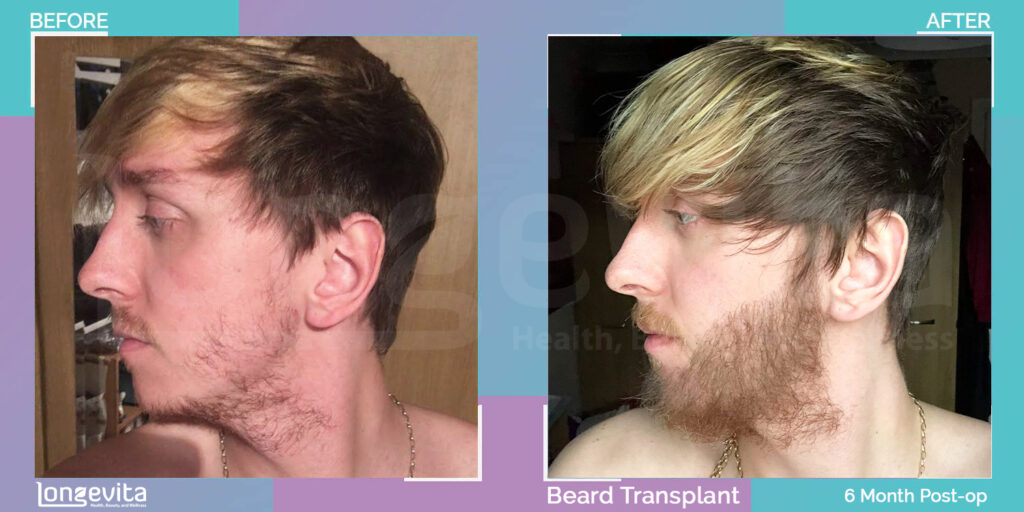
- Age: N/A
- Beard
- 3,000 grafts
- 6 Months
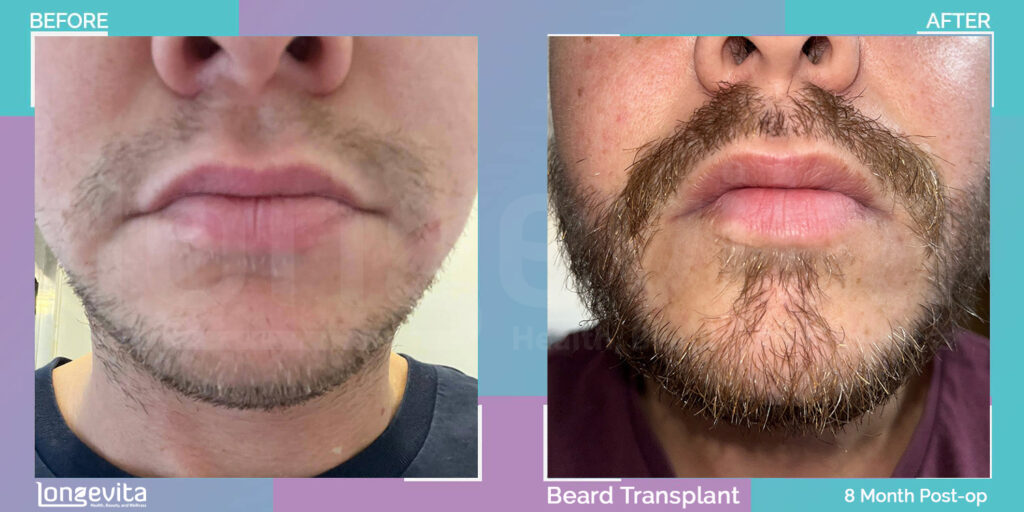
- Age: 35
- Beard
- 2,500 grafts
- 8 Months
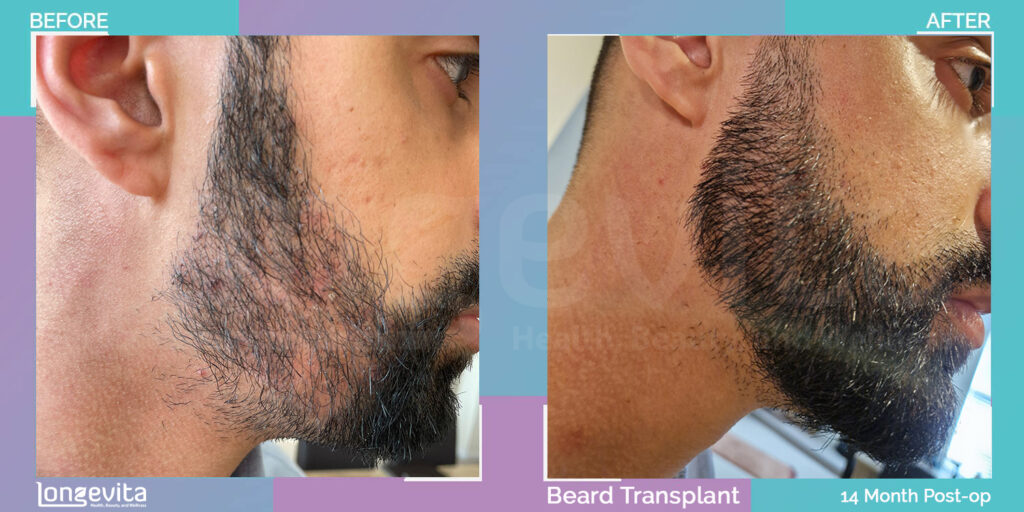
- Age: 31
- Beard
- 1,250 grafts
- 14 Months
Vincent's Beard Transplant Journey
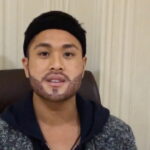
Patient Journey
1:25
0:54
0:54
Ready to start your Hair Transplant Journey in Turkey?
Fill out the form to receive a callback and book a consultation to receive your Free, no-obligation hair transplant treatment plan tailored specifically for your hair loss requirements.
Beard Transplant Reviews
See what patients say about getting their beard transplant with Longevita!
Frequently asked questions about Beard Transplants
You can shave and groom your beard after you get a transplant there. You can start using scissors after 2 months, a trimmer after 3 months and a razor after 6 months.
You may need around 2,500 hair grafts for your beard transplant. However, it can vary according to the face shape/size, donor area, and the aesthetic goals of the individual.
A beard transplant is performed under local anaesthesia, so you should not experience pain during the procedure. However, the administration of anaesthesia itself can cause some temporary pain. Additionally, you can experience some discomfort during the recovery process; the independent clinician will advise you on its management.
The results of a beard transplant are long-lasting, so you can enjoy them for many years. If you want to further improve the density of your beard, you can also get another transplantation surgery (provided your donor area is strong). However, you should wait until you’ve seen the final results of the first one.
Even though beard hair can be used for scalp transplants, the unnatural results are a major concern. It is because of the differences in the characteristics of beard and scalp hair. The independent clinicians connected through Longevita do not arrange beard-to-scalp hair transplants.
In the hands of the right practitioner, transplanted beards can look just like naturally grown ones. Real hair from the back of your scalp is used in this surgery, so there’s no need to worry about it looking fake.
This depends on you since you may be unable to grow a beard in your teenage years, the early or late twenties. There’s no minimum age requirement for a beard transplant.
Getting a beard transplant can be worth it since it can effectively grow new hair in patches or areas that had previously been bald. Since it uses a person’s own scalp hair, its results are quite natural-looking.
Unfortunately, you can’t wear a face mask for at least a week after a beard transplant.
A beard transplant should not leave visible scars. While you’ll have small, circular scars in your donor due to the extraction from the punch tool, they’ll be well-concealed by your hair when done properly. Additionally, the incisions made in your beard area will be covered by the hair growing out of them.
As with all surgical procedures, beard transplants carry risks. Selecting an experienced, qualified practitioner can help minimise potential complications. Outcomes vary between individuals. You should discuss specific risks and realistic expectations directly with your clinician during consultation.
Many people achieve positive outcomes from beard transplantation. Results depend on individual factors including hair and skin characteristics, surgeon technique, and post-operative care. Outcomes vary between individuals — your clinician can discuss realistic expectations based on your specific circumstances during consultation.

Dr Cagla earned her medical degree at Trakya University’s Faculty of Medicine in Bulgaria and has almost 6 years of hair transplantation experience. She is a specialist in FUE, DHI and Sapphire hair transplants of the scalp, eyebrows and beard and has performed over 6,000 surgeries. Dr Cagla is multilingual, with fluency in English, Bulgarian and Turkish.